
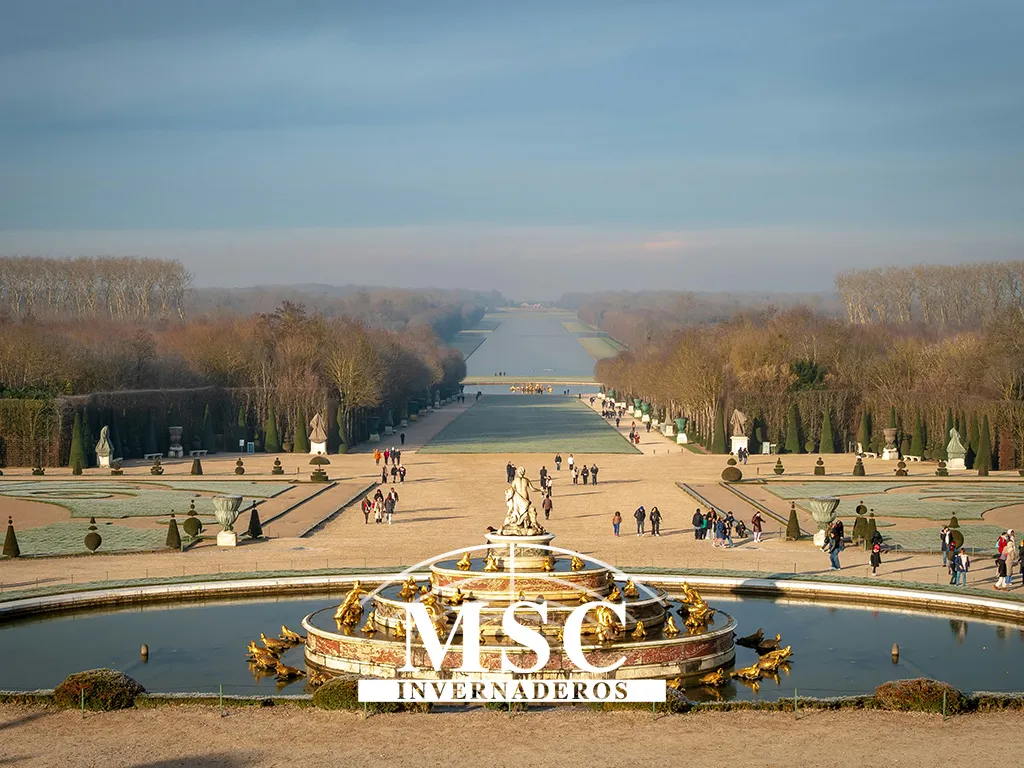
Today we want to launch a series of posts dedicated to the gardens of the world , in which we will collect those gardens that have become authentic monuments to nature, ingenuity and beauty.
Gardens of the world.
-
Butchart.
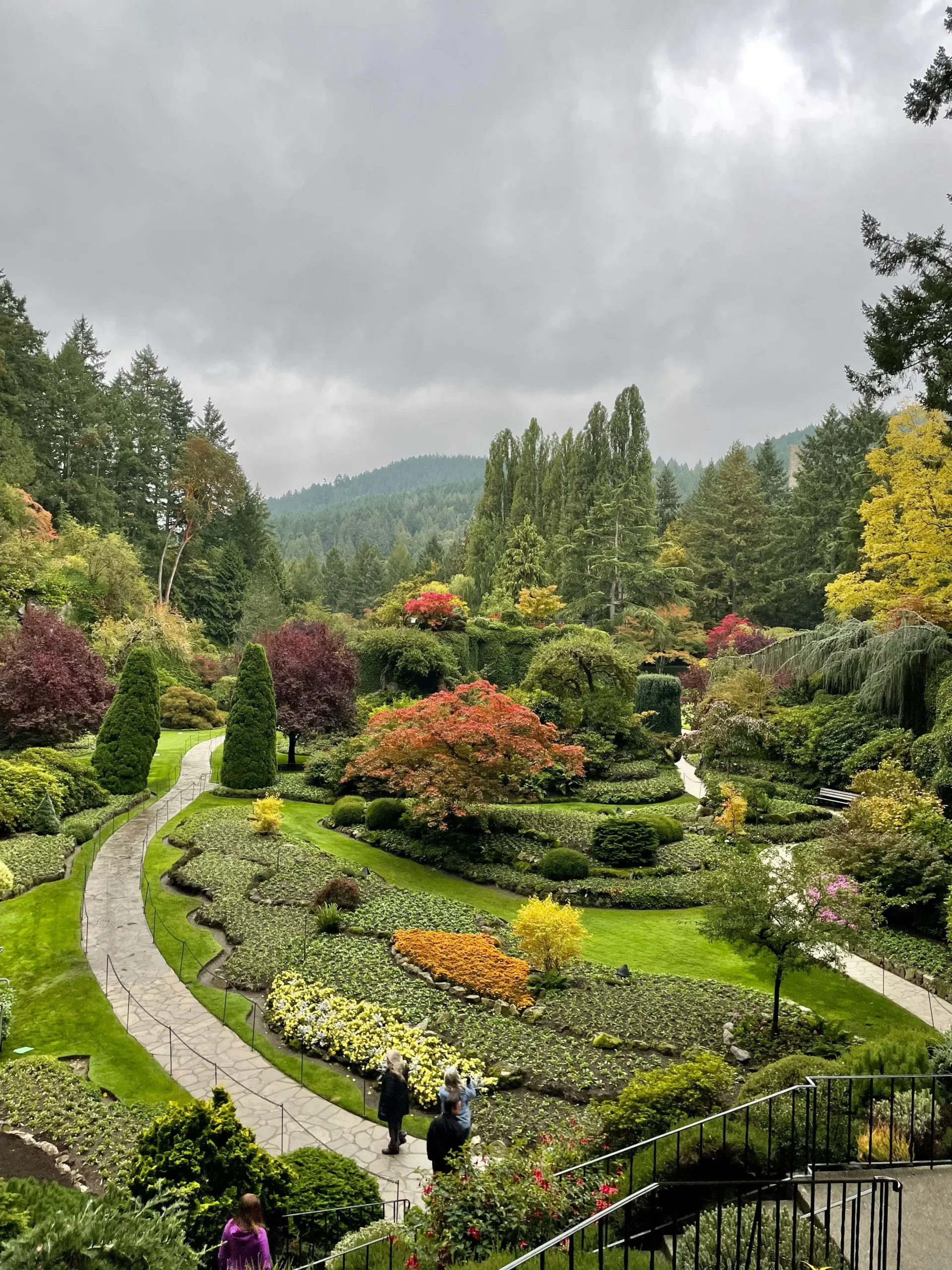
The Buchart Gardens are a Canadian national heritage site and one of the most famous and beautiful gardens in the world, with its 50 hectares located in Brentwood Bay.
These gardens were formerly a quarry managed by Portland Cement until 1904, when it was closed. Jennie Butchart , the wife of the cement company owner, used soil from nearby farms to fill the site, creating 22 hectares in which she planted 700 varieties of plants that bloom from May to October.
The multitude of flower species, trees, and shrubs, as well as the lakes and fountains, make the gardens a place for calm and relaxation. An annual rose competition has been held there for decades.
The complex comprises five gardens. Its 50 hectares showcase over 700 varieties of plants, creating a stunning chromatic spectacle that changes its hues with the seasons.
The Rose Garden is undoubtedly the star attraction, home to over 300 species whose vibrant colors and fragrances reflect Jennie Butchart's love for these plants. In the Japanese Garden , Himalayan blue poppies, Japanese maples, and beech trees represent the Asian world. The Italian Garden features a large central pond flanked by colorful flowers. And the Mediterranean Garden and the Sunken Garden complete the 55 hectares that have captivated thousands of visitors for a century.
This fairytale garden is maintained by a team of 50 gardeners who work to ensure that the more than one million plants continue to bloom year after year.
-
Versailles.
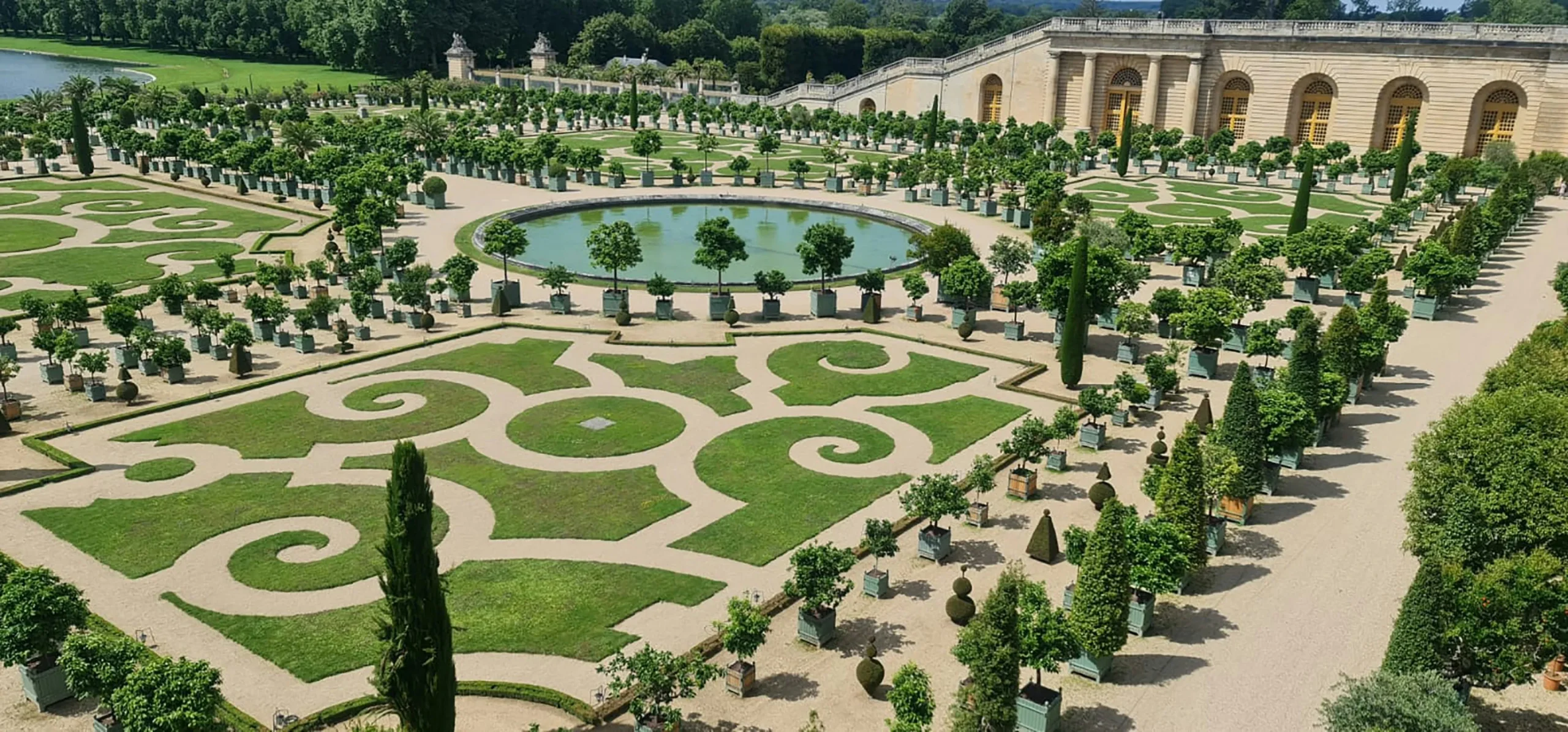
The gardens of Versailles are probably the most famous in the world. They were designed by the renowned French landscape architect André Le Nôtre for Louis XIV in the 17th century and were declared a UNESCO World Heritage Site in 1979.
They extend across what were the royal domains of the Palace of Versailles, specifically in the western area of the palace, and cover approximately 800 hectares of land with which the Sun King wanted to magnify his glory and that of Versailles.
The Palace of Versailles transports us to the era of the French monarchy's splendor and forms one of the most impressive settings in the world. With over thirty ponds and fifty fountains, it showcases the importance of water and its sound in the design. This sound accompanies us along the many pathways that connect the different areas; the Orangerie , Versailles' orangery, with over 1.000 trees, and the Grand Canal , an enormous navigable canal in the shape of a cross, approximately 1.500 meters long and 62 meters wide, flanked by statues, shrubs, and trees.
-
Gardens of cosmic speculation.
This garden is a true spectacle, combining mathematics and science with nature to inspire and amaze. Designed in 1989 by the architect and landscape designer couple Charles Jenks and Maggie Keswick at Portrack House (Dumfries) in Scotland.
We will surely not find another garden like it in the world; before getting lost along its paths, it is advisable to forget the traditional conception of parks in order to be surprised by the imagination and puzzles of its creators.
Designed to spark questions in its visitors, its creators played with the mysteries of the world to create "monuments" such as the "Waterfall of the Universe," which represents the formation of the universe with its steps, or the "Snail Mound," inspired by the Fibonacci sequence. DNA patterns intertwine with our past, and the spiraling "Heaven-Hell" bridge illustrates the profound relationship between good and evil.
We hope you enjoyed this first glimpse of the world's most impressive gardens and that it sparked your curiosity to explore them further. We will be adding to this spectacular list in future blog posts.
Pingback: The World's Most Impressive Gardens II - MSC Group Blog